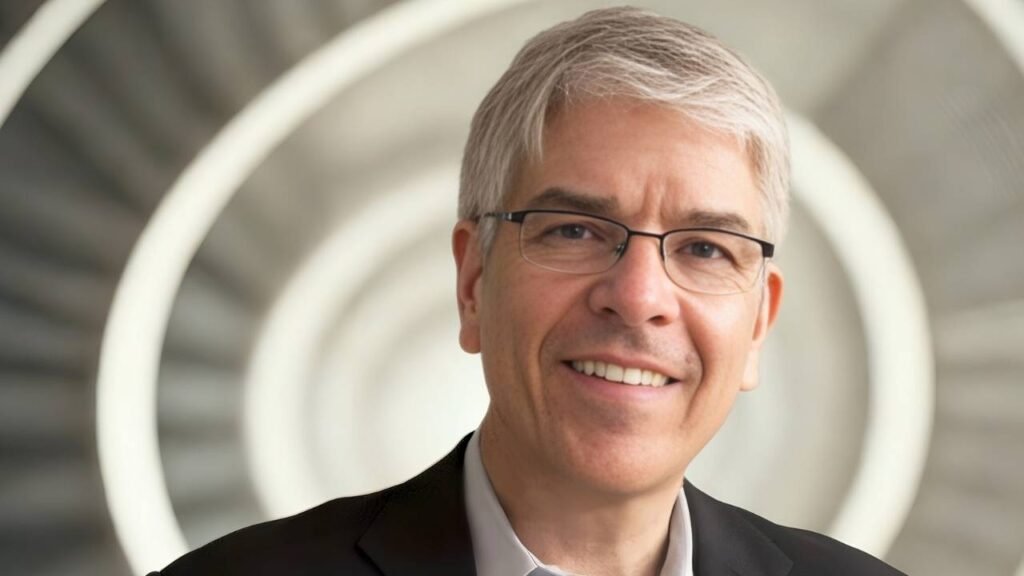
Paul Romer is not a celebrity in the traditional red-carpet sense, but in the world of ideas, his fame runs deep. As a Nobel Prize–winning economist, entrepreneur, and public intellectual, Romer has reshaped how governments, universities, and global institutions think about growth, innovation, and the power of ideas. In 2026, his work remains essential reading for policymakers and business leaders navigating an economy driven less by factories and more by knowledge.
Early Life and Background
Paul Michael Romer was born on November 7, 1955, in Denver, Colorado. He grew up in a household where public service and intellectual debate were part of everyday life. His father, Roy Romer, later served as governor of Colorado, a role that quietly exposed Paul to the intersection of policy, leadership, and long-term decision-making.
From an early age, Romer showed an affinity for analytical thinking. Mathematics and science came naturally to him, and those early interests would eventually guide him toward economics, a field where abstract theory meets real-world consequence.
Education and Intellectual Formation
Romer’s academic path was anything but narrow. He earned a bachelor’s degree in mathematics, then pursued advanced studies in economics across some of the world’s most prestigious institutions. He completed his PhD in economics at the University of Chicago, with additional graduate work at MIT and Queen’s University.
This diverse academic exposure shaped his intellectual style. Rather than accepting traditional economic models at face value, Romer became known for questioning assumptions and pushing for frameworks that better explained how innovation actually works.
The Career That Changed Modern Economics
The Birth of Endogenous Growth Theory
Paul Romer’s defining contribution to economics is endogenous growth theory. Before his work, economic growth was often treated as something driven by external forces, essentially luck or unexplained technological progress. Romer challenged that view.
His theory argued that ideas, knowledge, and innovation are not accidental byproducts of growth but its central engine. Policies that encourage education, research, and creativity, he showed, can directly influence how fast economies grow over time. This insight reshaped macroeconomics and influenced everything from education funding to intellectual property law.
Academic Leadership Across Elite Institutions
Romer’s ideas earned him faculty positions at leading universities, including the University of Rochester, the University of Chicago, the University of California, Berkeley, Stanford University, and New York University. At NYU, he founded the Marron Institute of Urban Management, expanding his focus to cities as engines of economic growth.
By the early 2000s, Romer was no longer just an academic economist. He was becoming a public thinker, invited into conversations about how nations could design better systems for prosperity.
Entrepreneurial Ventures and Business Interests
Unlike many economists, Romer did not limit his work to journals and classrooms. He co-founded Aplia, an education technology company designed to improve how economics and business were taught. The platform combined digital tools with adaptive learning, making complex subjects more accessible to students.
Aplia’s success culminated in its acquisition by Cengage Learning, marking Romer as a rare figure who successfully bridged theory and entrepreneurship. While he has never positioned himself as a traditional investor, this venture remains his most visible and impactful business achievement.
The World Bank Chapter
In 2016, Romer stepped into one of the most influential policy roles in the world when he became Chief Economist of the World Bank. His tenure was closely watched, particularly for his willingness to question long-standing metrics and assumptions used to evaluate national economies.
His time at the Bank was brief but consequential. In 2018, he resigned after publicly criticizing aspects of the institution’s data methodology, sparking global debate about transparency and accountability in international economic rankings. The episode reinforced his reputation as an economist unafraid to challenge powerful systems when evidence demands it.
Nobel Prize and Global Recognition
Paul Romer’s influence reached its pinnacle in 2018, when he was awarded the Nobel Prize in Economic Sciences, shared with William Nordhaus. The Nobel Committee cited Romer’s integration of technological innovation into long-run macroeconomic analysis as a breakthrough that transformed economic thinking.
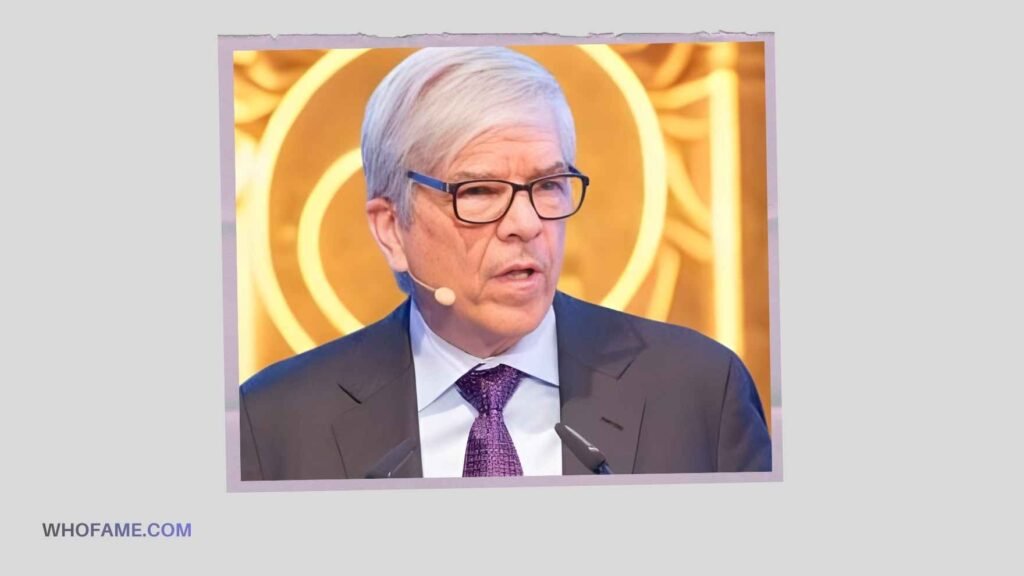
The award elevated Romer from respected academic to globally recognized thought leader. It also introduced his work to a broader audience beyond universities and policy circles.
Personal Life and Relationships
Romer is married to Caroline Weber, a professor of French literature and accomplished author. In a moment that captured public attention, the couple married on the very day Romer received his Nobel Prize, blending personal and professional milestones in a uniquely human way.
He is also a father and has spoken about the importance of future generations when discussing economic policy, particularly education and innovation. Despite his public stature, Romer has kept much of his family life deliberately private.
Current Role and Work in 2026
As of 2026, Paul Romer serves as the Seidner University Professor at Boston College and directs the Center for the Economics of Ideas. His recent work continues to explore how institutions can be designed to better reward innovation while maintaining fairness and transparency.
He remains a frequent contributor to public discourse through essays, lectures, and policy discussions, especially on topics such as urban development, education reform, and the economics of innovation.
Controversies and Public Debate
Romer’s career has not been free of controversy, but it has been defined by intellectual honesty rather than scandal. His World Bank departure drew criticism and praise in equal measure, with supporters applauding his commitment to data integrity and critics questioning his approach.
In academic and policy circles, Romer is known as someone who values evidence over consensus, a trait that has kept him at the center of debate for decades.
Biography Table
| Fact | Details |
|---|---|
| Full Name | Paul Michael Romer |
| Age | 70 (born November 7, 1955) |
| Profession | Economist, Nobel Laureate, Professor |
| Education | BS in Mathematics; PhD in Economics |
| Spouse | Caroline Weber |
| Children | Yes |
| Nationality | American |
| Parents | Roy Romer (father) |
| Major Award | Nobel Prize in Economic Sciences (2018) |
| Current Role | Professor at Boston College; Center Director |
Frequently Asked Questions
How old is Paul Romer in 2026?
Paul Romer is 70 years old, born on November 7, 1955.
Why is Paul Romer famous?
He is best known for developing endogenous growth theory and for winning the Nobel Prize in Economics in 2018.
Is Paul Romer still teaching?
Yes. In 2026, he teaches at Boston College and leads the Center for the Economics of Ideas.
Who is Paul Romer’s wife?
He is married to Caroline Weber, a professor of French literature and author.
Did Paul Romer found any companies?
Yes. He co-founded Aplia, an education technology company later acquired by Cengage Learning.
Why did Paul Romer leave the World Bank?
He resigned after publicly challenging aspects of the World Bank’s data methodology, sparking debate about transparency.
Related Posts
- Dan Clancy: Twitch CEO Age, Career, Net Worth, Leadership & Controversy
- Tristan Tate Biography: From Kickboxing Champion to Millionaire Influencer and Luxury Icon
- Neama Rahmani: The Prosecutor Turned Celebrity Legal Analyst Who Became LA’s Millionaire Lawyer
Final Thoughts
Paul Romer’s fame does not rest on headlines or spectacle, but on ideas that quietly shape the future. By proving that innovation can be cultivated through smart policy and institutional design, he changed how the world understands economic growth. In 2026, as societies grapple with technological disruption and inequality, Romer’s work feels not just relevant but essential. His legacy is a reminder that ideas, when taken seriously, can change the world.

Ahsan Ullah is an entertainment writer at WhoFame.com, covering celebrity biographies, career highlights, and verified public information. His work focuses on accuracy, clarity, and reader-friendly reporting of pop culture topics.