
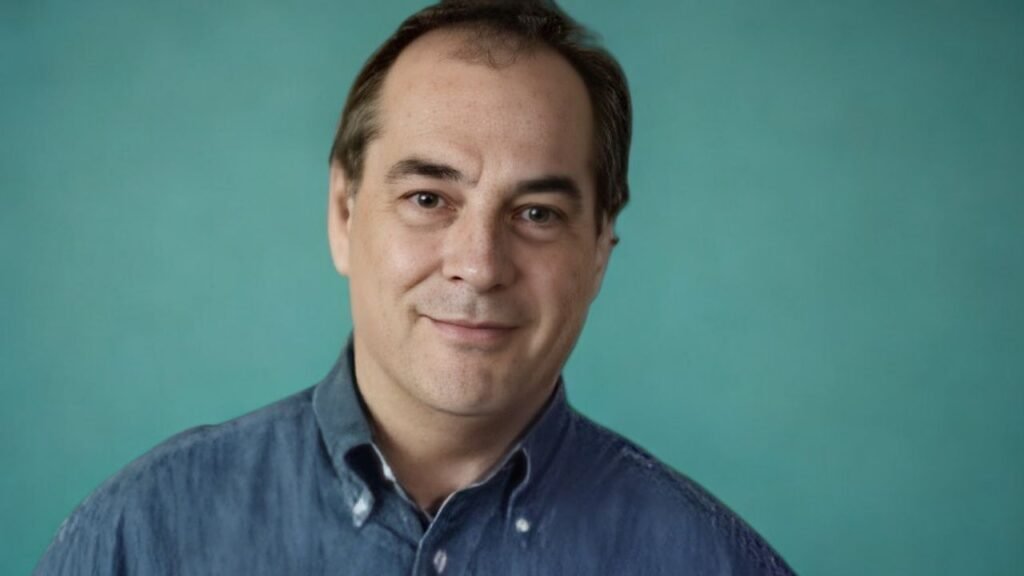
In the rarefied world of classical music, where legacy is built not on viral moments but on decades of disciplined artistry, Maximiano Valdés stands as one of Latin America’s most respected conductors. With a career spanning Europe, the United States, and the Caribbean, Valdés has earned a reputation for intellectual rigor, emotional clarity, and a deep commitment to orchestral culture. As of 2026, his influence remains firmly intact, not only through performances but through the institutions he helped shape.
Early Life and Musical Roots
Maximiano Valdés was born on June 19, 1949, in Santiago, Chile. His musical destiny was almost inevitable. He is the son of composer Sylvia Soublette and Chilean diplomat and political figure Gabriel Valdés, a household where art, culture, and public life coexisted naturally.
From an early age, Valdés was immersed in music, studying piano and violin before gravitating toward conducting. Unlike many prodigies driven by performance alone, his early curiosity leaned toward structure, interpretation, and the architecture of sound, traits that would later define his conducting style.
Education and Artistic Formation
Valdés’ formal training took him far beyond Chile. He studied at the Accademia Nazionale di Santa Cecilia in Rome, one of Europe’s most prestigious musical institutions, where he refined his skills in piano, composition, and orchestral conducting.
Equally formative were his mentors. He worked under legendary teachers such as Franco Ferrara and Sergiu Celibidache, and later participated in the Tanglewood Music Center, where he studied with Leonard Bernstein and Seiji Ozawa. These experiences exposed him to both European precision and American expressive freedom, a blend that became central to his artistic voice.
Breaking Into the International Scene
Valdés’ professional breakthrough came in Europe when he served as assistant conductor at Teatro La Fenice in Venice. His rise accelerated after winning top honors at major international conducting competitions, including the Nikolai Malko Competition and the Vittorio Gui Competition, achievements that placed him firmly on the global classical radar.
His American debut in 1987 marked a turning point. Just two years later, he was appointed Music Director of the Buffalo Philharmonic Orchestra, a role he held from 1989 to 1998. During this period, Valdés expanded the orchestra’s repertoire, emphasized contemporary and Latin American composers, and strengthened its national profile.
European Leadership and Artistic Authority
After Buffalo, Valdés returned to Europe with renewed prestige. He became Music Director of the Orquesta Sinfónica del Principado de Asturias in Spain, where he led the ensemble for more than a decade. His tenure was marked by artistic stability, adventurous programming, and critical acclaim.
Beyond Spain, Valdés conducted leading orchestras across Germany, Italy, France, and Latin America, while also maintaining a strong presence in opera houses. His operatic work, particularly in Italian repertoire, revealed his sensitivity to vocal phrasing and dramatic pacing.
Puerto Rico Symphony and Festival Casals
One of the most defining chapters of Valdés’ career began in 2008, when he was appointed Music Director of the Puerto Rico Symphony Orchestra. Over nearly two decades, he transformed the orchestra into a respected cultural institution in the Caribbean, navigating financial challenges, natural disasters, and shifting cultural landscapes with steady leadership.
Simultaneously, he served as Artistic Director of the Festival Casals, Puerto Rico’s premier classical music festival. Under his guidance, the festival attracted international soloists and reinforced San Juan’s place on the global classical map.
In 2025 and 2026, the orchestra dedicated its final season under Valdés to celebrating his legacy, marking the end of one of the longest and most impactful directorships in its history.
Musical Style and Repertoire
Maximiano Valdés is known for a conducting style that balances intellectual discipline with emotional transparency. His interpretations favor clarity, structural coherence, and respect for the composer’s intent, rather than theatrical excess.
His repertoire spans from Mozart and Beethoven to Mahler, Debussy, and contemporary Latin American composers. He is particularly admired for bringing underperformed works into mainstream programs, helping broaden audiences’ musical horizons without alienating traditional listeners.
Recordings, Teaching, and Honors
Valdés has recorded extensively, including critically praised releases with the Naxos label. His discography reflects his broad interests, from standard symphonic works to lesser-known compositions deserving wider recognition.
In addition to performance, Valdés has remained deeply committed to education. He has served as a professor and mentor, notably at the University of Puerto Rico, where he received an honorary doctorate in recognition of his cultural contributions.
Personal Life and Family
Valdés keeps his private life largely out of the public eye. His background is briefly notable: Chilean nationality, raised in a culturally influential family, and shaped by both artistic and diplomatic environments. He is known to divide his time between musical centers depending on professional commitments, maintaining a life that mirrors his international career.
Net Worth and Lifestyle
As of 2026, Maximiano Valdés’ net worth is not publicly disclosed, and no reliable estimates exist. Unlike celebrity conductors who cultivate luxury branding, Valdés is known for a relatively understated lifestyle, focused primarily on music, education, and institutional leadership rather than commercial ventures.
There is no verified public record of business investments, brand ownership, or entrepreneurial activity, and any speculation would be misleading.
Notable Public Moments and Controversies

Valdés’ career has been largely free of scandal. The most discussed public moment in recent years was his announced departure from the Puerto Rico Symphony Orchestra, which generated emotional responses from musicians and audiences alike. Rather than controversy, the transition was widely framed as the closing of an era, marked by tributes and retrospective performances.
Legacy and Cultural Impact
Few conductors have managed to bridge continents as effectively as Maximiano Valdés. He has played a pivotal role in elevating Latin American classical music within global institutions while also reinforcing the importance of cultural leadership beyond the traditional European centers.
His legacy lies not only in performances but in orchestras strengthened, festivals sustained, and generations of musicians influenced by his standards and values.
Frequently Asked Questions
How old is Maximiano Valdés in 2026?
He is 76 years old, born on June 19, 1949.
What is Maximiano Valdés best known for?
He is best known as an international orchestral conductor and former music director of the Puerto Rico Symphony Orchestra.
Is Maximiano Valdés still conducting?
Yes. While no longer holding a long-term directorship, he continues guest conducting and educational work.
Did Maximiano Valdés work in the United States?
Yes. He served as Music Director of the Buffalo Philharmonic Orchestra from 1989 to 1998.
Has Maximiano Valdés won major awards?
He has won prestigious international conducting competitions and received honorary academic recognition.
Does Maximiano Valdés have recordings?
Yes. His recordings, including releases on Naxos, are internationally distributed.
Biography Table
| Detail | Information |
|---|---|
| Full Name | Maximiano Valdés |
| Age (2026) | 76 |
| Profession | Orchestral Conductor |
| Nationality | Chilean |
| Education | Accademia Nazionale di Santa Cecilia |
| Parents | Sylvia Soublette, Gabriel Valdés |
| Relationship Status | Private |
| Children | Not publicly disclosed |
| Net Worth | Not publicly disclosed |
| Notable Roles | Buffalo Philharmonic, Puerto Rico Symphony Orchestra |
| Current Focus | Guest conducting, education |
Related Posts
- Jaelen Johnston: Age, Country Music Rise, The Voice & Career
- Neal McCoy: Age, Career, Net Worth, Patriotism, Music and Legacy
- Gazzman Couleur: The Inspiring Journey of Haiti’s Kompa Legend
Final Thoughts
Maximiano Valdés represents a rare kind of fame, one built on endurance, integrity, and cultural stewardship rather than spectacle. In 2026, his name continues to command respect among musicians and audiences who value substance over flash. His journey from Santiago to the world’s great concert halls is not just a personal success story, but a testament to the enduring power of classical music when guided by thoughtful, principled leadership.

Ahsan Ullah is an entertainment writer at WhoFame.com, covering celebrity biographies, career highlights, and verified public information. His work focuses on accuracy, clarity, and reader-friendly reporting of pop culture topics.


Pingback: Malte Marten: Handpan Musician Age, Career, Tours and Artistic Journey -